On the evening of September 1, 1915, West 63rd Street was closed to cars. Not permanently, just from three in the afternoon until nine at night. It was called a “play street,” which was a new idea then, part of a Progressive Era experiment born of the ugly arithmetic of children and traffic sharing the same narrow corridor between tenements. The year before, New York had arrested over twelve thousand children for the crime of playing outdoors. An estimated seven hundred thousand kids had almost nowhere safe to go, and the existing playgrounds were laughably insufficient, so a civic reformer named John Collier had proposed a simple fix in the New York Times: close off certain streets for certain hours. Let the children have the road. A police commissioner named Arthur Woods ran with the idea, opening the first official play street on Eldridge Street in the Lower East Side on July 25, 1914, and co-founding the Police Athletic League that same year. By October, there were twenty-one play streets across the city. By 1924, there would be fifty.
On this particular evening, on this particular block, the children were not the only ones claiming space. At 207 West 63rd Street, a woman named Lyda D. Newman had just opened a suffrage headquarters. The building was adorned with posters, flags, and streamers in suffrage colours. An open-air meeting was underway on the sidewalk. Dr Mary Halton spoke. So did Portia Willis. And while the speeches were happening, mothers from the neighbourhood were invited upstairs to watch their children playing in the street below through the headquarters windows.
The New York Times covered this in two small items. The first, on August 29, announced the opening under theheadline “Suffrage Centre for Negroes”: the Woman Suffrage Party was establishing a headquarters “for colored people” at 207 West 63rd Street, to be run by “Miss Lyda Newman, who is doing excellent work for suffrageamong her own people.” Women from the neighbourhood had been asked to play hostess while Newman wentcanvassing. The second item, on September 2, described the scene: the open-air meeting, Newman in charge, her assignment to continue “canvassing and organising street meetings through the thirteenth Assembly District from now until election day.” Then the details about the play street.
That is nearly the entire public record of Lyda D. Newman’s political life, two newspaper blurbs. A decorated storefront on a closed street. Children played in the road while their mothers leaned out of the windows of suffrage headquarters. It does not sound like the stuff of history. It is, in fact, one of the most complete pictures we have of how Black women actually organised for the vote in early twentieth-century New York, and it tells you more about the mechanics of political change than a shelf full of biographies about people who gave speeches in marble halls.
The neighbourhood was called San Juan Hill. Something that used to exist where Lincoln Centre stands now, which is a bit like knowing a person only as the parking lot that replaced their house.
The neighbourhood was called San Juan Hill. Something that used to exist where Lincoln Centre stands now, which is a bit like knowing a person only as the parking lot that replaced their house.
San Juan Hill
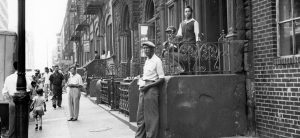
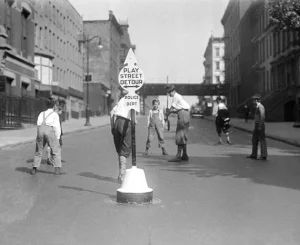
San Juan Hill occupied roughly sixteen acres of Manhattan’s Upper West Side, bounded approximately by 59th Street to the south, the mid-60s to the north, Amsterdam Avenue to the east, and West End Avenue to the west. The name is debated. It may honour the Black soldiers of the 10th Cavalry who fought at the Battle of San Juan Hill during the Spanish-American War in 1898. It may honour the veterans who settled nearby. Or it may be an agrim joke about the racial “battles” that tore through its streets with depressing regularity: the Tenderloin Race.
Riot in 1900, the San Juan Hill race riot in 1905, and the attacks on Black residents by white men fromneighbouring Hell’s Kitchen after Jack Johnson won the heavyweight championship in 1910.
Riot in 1900, the San Juan Hill race riot in 1905, and the attacks on Black residents by white men fromneighbouring Hell’s Kitchen after Jack Johnson won the heavyweight championship in 1910.
By 1900, San Juan Hill was the most densely populated Black neighbourhood in Manhattan, a position it held until the Great Migration pulled the centre of Black New York northward to Harlem in the 1910s and 1920s.The population was profoundly diverse. African Americans from the South lived alongside West Indians from the Caribbean and, later, Puerto Ricans, all compressed into the same overcrowded tenements. Mary White Ovington, the NAACP co-founder, who studied the neighbourhood closely for her 1911 book Half a Man, described the buildings as human hives, honeycombed with small rooms, thick with people. The historian Seth Scheiner documented that a single block housed nearly 5,000 residents. Beds were rented in shifts to boarders who worked nights, while day-shift tenants slept. Every class of Black life occupied the same hallways, because racial discrimination in housing left no room for class sorting. Marcy Sacks put it cleanly in Before Harlem, her 2006 academic study of the neighbourhood. Doctors, artists, teachers, elevator operators, sex workers, preachers, domestic workers, thieves, and the unemployed all shared cramped neighbourhood space.
Employment was sharply constrained. Men worked as porters, longshoremen, elevator operators, and nightwatchmen. Women overwhelmingly worked as domestic servants in white households. George Edmund Haynes, in his 1912 Columbia dissertation, documented the systematic exclusion of Black workers from trades and unions. Competition for low-wage jobs with Irish immigrants from Hell’s Kitchen kept the tension between the two neighbourhoods at a low simmer that periodically boiled over into violence.
And yet the neighbourhood produced extraordinary things. The Marshall Hotel, at 127-129 West 53rd Street, became the centre of what contemporaries called “Black Bohemia.” James Weldon Johnson claimed it hosted the first modern jazz band in Manhattan. James P. Johnson moved to San Juan Hill in 1908 and created stride piano there, later composing “The Charleston.” The Jungle Casino, a basement club on West 62nd Street, is where the Charleston dance itself reportedly originated. Dozens of poolrooms, dance halls, and basement rathskellers offered music and dancing that ran until dawn. Mutual aid societies organised along every conceivable regional and ethnic line: the Sons of Virginia, the Bermuda Benevolent Association, the Danish West Indian Ladies Aid Society, the Montserrat Progressive Society. Churches anchored community life, particularly Union Baptist and St. Cyprian’s Chapel, an Episcopal mission serving Caribbean immigrants founded by the Reverend John W. Johnson.
The neighbourhood, as Sacks wrote, was in many ways a cultural and economic precursor to Harlem. The creative energy that would later be filed under the Harlem Renaissance had its roots here, in these tenement basements, street corners, and overcrowded clubs. In the 1950s and 1960s, New York City designated the area a slum, condemned the buildings, and bulldozed the whole thing to build Lincoln Centre for the Performing Arts, displacing over 17,000 residents. A cultural monument was built atop a cultural ecosystem deemed disposable. Today, you can see the New York Philharmonic, where Lyda Newman once canvassed for votes.
She lived there, not as an outside organiser helicoptered in for a campaign, but as a resident. The 1910 census lists her as living in a tenement on West 63rd Street, with the Reverend Johnson of St. Cyprian’s. The 1916 city directory lists her home address as 210 West 63rd Street, three doors from the suffrage headquarters she opened at 207 West 63rd Street. She was organising her own block; she knew the mothers she was inviting to the windows, she knew whose children were playing in the street.
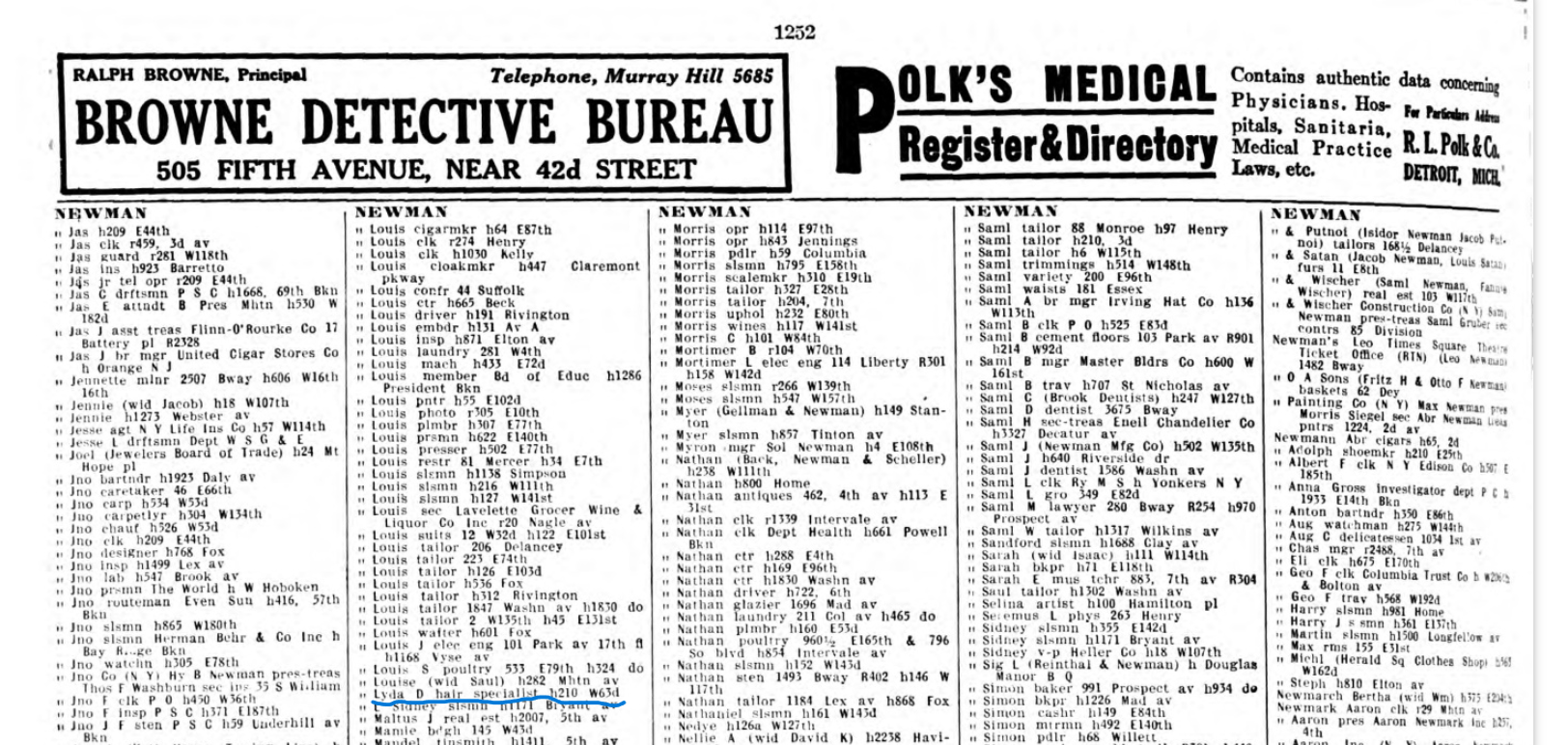
This is where the story takes a turn that the internet does not especially welcome. Search for Lyda D. Newman online, and you will find a clean, satisfying biography that reads like it was assembled by someone who believes history should be inspirational above all else. Born 1885. Invented the first synthetic-bristle hairbrush. Third Black woman to receive a U.S. patent.
There are far more interesting details, though, than just a patent.
Start with the birth year, which ought to be the easiest fact to nail down. The 1905 New York State Census lists Newman’s age as 40, implying a birth around 1865. The 1925 census records her as 35, suggesting she was born around 1890. The most carefully researched secondary source available, a scholarly biographical sketch by Megan Lounsberry in the Alexander Street “Biographical Database of Black Women Suffragists,” states it directly: born in Ohio, sometime between 1865 and 1885. If born in 1885, she was thirteen when she filed the patent and roughly seven years old when her earliest documented commercial activity began in 1892. If born in the mid-1860s, as the weight of the evidence favours, she was a working professional in her late twenties or early thirties when she began appearing in the records. She appears never to have married, listed as single on every census from 1905 to 1925. Her death date is unknown. The last documented trace of her is the 1925 state census. Wikipedia, in an unusual show of restraint, lists her datesas “fl. 1892-1925.” No records containing her parents’ names have been found, despite what some popular sources claim about a steelworker father and a homemaker mother.
What we can document is a professional life centred on hair. The 1894 New York City Directory lists her as”Newman Lydia D. hair, 620, 6th av.” That same year, she registered the trademark VIDACABELLO with the U.S. Patent Office, describing it as a preparation for the hair and scalp and noting that it had been in continuous use since August 1892. By July 1903, a Newport Daily News advertisement announces that Lyda Newman, hair and scalp specialist of New York, has arrived for her ninth season in Newport. Her ninth season. That places her working the wealthy summer resort circuit since approximately 1895, serving a clientele among Newport’s rich. This was a woman who understood branding, trademarks, seasonal business cycles, and the Patent Office bureaucracy years before she filed the patent that would later make her a Wikipedia entry.
US Patent No. 614,335, titled simply “Brush,” was filed on July 11, 1898, and granted on November 15 of the same year. It describes a hairbrush designed for easy cleaning and improved hygiene. The design has three innovations worth naming. First, a removable bristle-holder: the bristles are mounted on a separate unit formed of parallel bars, connected by transverse bars, that can be unlocked from the brush back via a sliding bolt operated by a button on the handle. You pop out the bristle section, clean it, and snap it back in. Second, the ventilation system: the spaced bars create slots that communicate with an air chamber between the holder and the recessed brush back, allowing air circulation rather than the stagnant accumulation of hair, oil, and debris that plagued solid-backed designs. Third, durable construction. The patent text emphasises that the brush is”simple and durable in construction, very effective when in use.” Newman’s design is about systems, not spectacle. It is about what happens after the sale. It assumes the person using this tool deserves a clean one and can maintain it herself.
US Patent No. 614,335, titled simply “Brush,” was filed on July 11, 1898, and granted on November 15 of the same year. It describes a hairbrush designed for easy cleaning and improved hygiene. The design has three innovations worth naming. First, a removable bristle-holder: the bristles are mounted on a separate unit formed of parallel bars, connected by transverse bars, that can be unlocked from the brush back via a sliding bolt operated by a button on the handle. You pop out the bristle section, clean it, and snap it back in. Second, the ventilation system: the spaced bars create slots that communicate with an air chamber between the holder and the recessed brush back, allowing air circulation rather than the stagnant accumulation of hair, oil, and debris that plagued solid-backed designs. Third, durable construction. The patent text emphasises that the brush is”simple and durable in construction, very effective when in use.” Newman’s design is about systems, not spectacle. It is about what happens after the sale. It assumes the person using this tool deserves a clean one and can maintain it herself.
What is clear is that she was exceedingly rare in the patent record for her era, and she is sometimes placed alongside later Black hair-care entrepreneurs like Madam C.J. Walker and Marjorie Joyner, though no direct business connection between them has been documented.
The two speakers at Newman’s headquarters opening deserve more attention, too, because their presence tells you something about the strange, strained architecture of interracial suffrage organising in 1915.
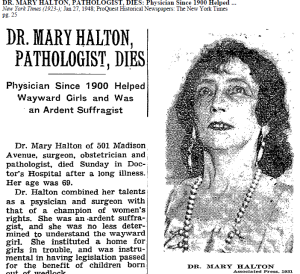
Dr Mary Halton was born in San Francisco in 1878 and graduated from Stanford’s Cooper Medical College in 1900. She arrived in New York by 1906, where she practised as a pathologist, gynaecologist, and obstetrician at Gouverneur Hospital and served as a Medical School Inspector for the city’s Department of Health. She was a district-level suffrage organiser within the Woman Suffrage Party, leading the WSP chapter in the 29th Assembly District from 1913. Her 1948 New York Times obituary described her as “an ardent suffragist,” a phrase that does a lot of work without telling you much. She became a pioneer in IUD research, sharing her findings with Margaret Sanger in 1921. She founded the Halton Endowment for Girls. She led a campaign to reform birth certificate laws to protect children born outside ofmarriage. She was reportedly the first woman appointed to the faculty of Harvard Medical School. Her life after the suffrage movement was as consequential as her life within it.
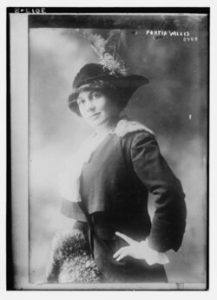
Portia Willis was a figure entirely different. Born around 1887, she was the daughter of Colonel Benjamin Albertson Willis, a Civil War Union officer who had served as a Democratic U.S. Representative from New York in the 1870s. The newspapers called her “The Prettiest Suffragette in New York State.” She was one of the most visible suffragists in the state. She organised for the New York State Suffrage Association, conducted statewide lecture tours, served as grand marshal for three suffrage parades, spoke for the cause in Massachusetts, New Jersey, and Washington, D.C., and reportedly dropped suffrage leaflets from aeroplanes over Long Island, which is the kind of detail that makes you wish someone had beenfilming. In 1931, her name was placed on the suffrage “Honour Rolls” at the State Capitol in Albany. Her papersare held at the Sophia Smith Collection at Smith College.
That two prominent white suffragists spoke at a “Negro Suffrage Headquarters” reflects the Woman Suffrage Party’s strategic calculation ahead of the November 1915 referendum. It also reflects Newman’s standing. She could draw speakers of significant profile to her event. She was not a marginal figure within the movement. She was the person the WSP trusted to run an entire operation in the 13th Assembly District from September through election day.
But this cooperation was happening against a national backdrop that makes the scene on West 63rd Street feel like a coalition, rather than an exception.
The National American Woman Suffrage Association, the dominant national suffrage organisation since its formation in 1890, pursued what historians have called a Southern Strategy, and they are not being metaphorical. NAWSA actively courted white Southern support at the expense of Black women, and the record of exclusion is specific enough that you do not need to read between the lines.
At the 1895 Atlanta convention, no Black women were invited. Susan B. Anthony asked Frederick Douglass not to attend because his presence might offend the Southern delegates. At the 1903 New Orleans convention, Black women were barred entirely. Belle Kearney of Mississippi gave the keynote, arguing that enfranchising women would settle the race question in politics, and by “settle”, she meant that white women’s votes would outnumber Black votes. In 1911, when a member named Martha Gruening asked NAWSA to pass a resolution denouncing white supremacy, President Anna Howard Shaw refused. At the 1913 suffrage parade in Washington, organisers ordered Black women to march at the rear of the procession. Ida B. Wells-Barnett, who was not the sort of person to whom you would give that kind of instruction, refused and inserted herself into the Illinois delegation in mid-March. As late as 1919, Carrie Chapman Catt opposed admitting the NortheasternFederation of Women’s Clubs, a Black women’s organisation, to NAWSA, for fear it would alienate whitevoters.
The racism was not a byproduct; it was ideological. Elizabeth Cady Stanton opposed the Fifteenth Amendment, calling it “Patrick and Sambo and Hans and Yung Tung”, making laws for educated, refined women. Shaw declared that giving Black men the ballot had made them “political superiors of white women,” as though this were the relevant injustice. A surviving 1912 suffrage broadside argued openly that women’s suffrage would more than double the native white majority in the electorate, which is not a sentence you write accidentally. Catt herself promoted states’ rights positions that amounted, in practice, to endorsing polltaxes and literacy tests.
Black women responded the way Black Americans have generally responded to being excluded from institutions that claimed to represent them. They built their own. The National Association of Coloured Women, founded in 1896 with Mary Church Terrell as its first president, grew to nearly 100,000 members by 1916 and officially endorsed suffrage in 1912, two years before the General Federation of Women’s Clubs, its white counterpart, did the same. In Brooklyn, Sarah J.S. Tompkins Garnet founded the Equal Suffrage League in the late 1880s, making it the first suffrage organisation for Black women in the country. Its members included Dr Susan McKinney Steward, the first Black female physician in New York, and Charlotte Ray, thefirst Black female lawyer in the United States. In Chicago, Wells-Barnett launched the Alpha Suffrage Club inJanuary 1913, which proved its political muscle by helping elect Oscar DePriest as Chicago’s first Black alderman two years later.
Terrell, who was Oberlin-educated, fluent in three languages, and the first Black woman appointed to a major city school board, articulated the bind with precision: she belonged to the only group in the country that had two such enormous obstacles to surmount, both sex and race. She told NAACP leader Walter White that if white suffrage leaders could pass the amendment without giving Black women the vote, they would do it without blinking. Nannie Helen Burroughs, asked by a white woman what Black women would do with the ballot, answered with a question of her own: what can she do without it?
Newman was not a Terrell or a Wells. She did not give speeches at national conventions or found organisations that historians would later write books about. She was the person on the ground, translating the suffrage cause into the daily texture of a neighbourhood where women worked as domestic servants and children played in streets that might or might not be closed to traffic depending on the day. The foundational scholarly work on this history is Rosalyn Terborg-Penn’s African American Women in the Struggle for the Vote, 1850-1920, published in 1998. The
Journal of Southern History called it “a powerful indictment of white suffrage activists who were able to see beyond the sexism but not the racism of their society.” Martha S. Jones extended the analysis across two centuries in Vanguard, published in 2020. The scholarship is recent because the erasure was thorough.
Journal of Southern History called it “a powerful indictment of white suffrage activists who were able to see beyond the sexism but not the racism of their society.” Martha S. Jones extended the analysis across two centuries in Vanguard, published in 2020. The scholarship is recent because the erasure was thorough.
And that returns us to the play street.
Think about what Newman actually built on the evening of September 1, 1915. The street is closed. Children are playing between the tenements. An open-air meeting is underway. Upstairs, theheadquarters is decorated with suffrage posters, flags, and streamers. Mothers are watching their children through the windows. Newman will be out canvassing the 13th Assembly District through November. The whole arrangement is designed so that women do not have to choose between their children and their citizenship. Childcare, safety, community, and politics, braided together on a single city block so thatparticipation does not require anyone to be heroic. It just requires showing up.
If her brush patent is about designing for maintenance, her organising is about designing for showing up.
All of it was aimed at a single goal: the November 2, 1915, suffrage referendum, which asked New York’s male voters whether to amend the state constitution to grant women full voting rights. The amendment had already passed two successive state legislatures, in 1913 and 1915, before reaching the ballot. The pro-suffrage campaign was enormous. The WSP, NAWSA (which had relocated its national headquarters to New York in 1909), and allied organisations conducted door-to-door canvassing, street-corner speaking marathons, and rallies at Carnegie Hall. On October 23, an estimated twenty-five to forty thousand women marched up Fifth Avenue in the largest suffrage parade in the city’s history. Catt chaired the Empire State Campaign Committee. Harriot Stanton Blatch led the Women’s Political Union. Rose Schneiderman organised across class lines through the Women’s Trade Union League.
The referendum failed.
The final count was 553,348 in favour, against 748,332 opposed, a margin of nearly 200,000 votes. Only six of New York’s sixty-two counties approved the measure. The city itself voted it down 57 to 43 per cent. Suffrage measures also lost that same day in Pennsylvania, New Jersey, and Massachusetts. The defeat was total but temporary. Suffragists adopted the motto “We fall forward.” Catt assumed the NAWSA presidency in December 1915 and unveiled her “Winning Plan,” combining state and federal campaigns. The 1917 effort was dramatically better funded, with over five hundred thousand dollars compared to ninety thousand in 1915, and it benefited from the changed political landscape of the First World War, which allowed suffragists to frame the vote as a “war measure.” Tammany Hall withdrew its opposition, freeing immigrant male voters to follow their consciences. On November 6, 1917, the amendment was passed, 703,120 to 600,776, roughly 54 per cent in favour. New York City provided the decisive margin. New York became the first state east of the Mississippi to grant women full suffrage, and the momentum from that victory carried through to the Nineteenth Amendment in 1920.
Newman exercised the right she had fought for. Her name appears on the 1924 New York City voter list for the 51st Election District, seven years after women won the vote in New York State. It is the last documented trace of her life. After that, nothing. No obituary. No death date. No grave that anyone has found.
The gaps in Newman’s record are not incidental to her story. They are the story, or at least a large and honest part of it. We do not know with certainty when she was born. We do not know when she died. We do not know her parents’ names. The synthetic-bristle myth is unsupported by her own patent. These are not small details. And they are not merely frustrating lacunae in anotherwise complete picture. They are themselves historically meaningful. They reflect how history has been stored, and who was considered worth the trouble of storing it. The archival silence around Black women’s lives in this period is not an accident. It is a system working as designed.
The temptation, when you encounter a life like this, is to fill the gaps with inspiration.
The better move is to resist the tidiness, because Newman’s actual significance is tied to the jaggedness. She is interesting not because she fits the lone-genius inventor narrative, but because she does not. She was a working professional who had been branding hair products and serving wealthy clients in Newport for years before she filed a patent for a brush that was designed to be cleaned. She was a neighbourhood organiser who understood that political participation is a design problem: if you want women to show up, you have to design the day so they can. She lived on the same block where she opened her headquarters. She knew whose children were playing in the street.
And there is a final irony. The neighbourhood where she did all of this, San Juan Hill, the overcrowded, culturally generative, racially mixed sixteen acres where stride piano was born and the Charleston was danced, and mutual aid societies with names like the Bermuda Benevolent Association and the Montserrat Progressive Society kept people alive, was later designated a slum and demolished. Over seventeen thousand residents were moved out. Lincoln Centre went up in the 1950s and 1960s. A performing arts complex, built on top of a neighbourhood that had been performing since before anyone with a chequebook thought to call it culture.
The story is not only that we forgot Lyda D. Newman. It is that we got very good at forgetting the kinds of places that produced her.
If you want a closing image, go back to the brush. A hairbrush is intimate. It is daily. It is the kind of object you use without thinking about who designed it or why. Newman patented a version that assumes hair care is not an anaesthetic luxury but a matter of health and dignity, and that the tool itself should be maintainable by the person using it. Then, seventeen years later, she organised the vote the same way: not as abstract rights talk, not as a speech from a podium, but as a practical redesign of the day so that women could show up. Close the street. Let the children play. Put the posters in the windows. Go knock on doors.
That is a theory of social change you can hold in your hand.
Sources
- “Suffrage Centre for Negroes.”New York Times, August 29, 1915.
- “Negro Suffrage Headquarters.”New York Times, September 2, 1915.
- Lounsberry, Megan. “Lyda Newman.”Biographical Database of Black Women Suffragists. Alexander StreetPress / ProQuest.
- US Patent No. 614,335. “Brush.” Filed July 11, 1898; granted November 15, 1898. Lyda D. Newman, NewYork, NY. Available via Google Patents.
- Terborg-Penn, Rosalyn.African American Women in the Struggle for the Vote, 1850-1920. Bloomington:Indiana University Press, 1998.
- Jones, Martha S. Vanguard: How Black Women Broke Barriers, Won the Vote, and Insisted on Equality for All .New York: Basic Books, 2020.
- Sacks, Marcy. Before Harlem: The Black Experience in New York City Before World War I. Philadelphia:University of Pennsylvania Press, 2006.
- Ovington, Mary White. Half a Man: The Status of the Negro in New York. New York: Longmans, Green, 1911.
- Haynes, George Edmund. The Negro at Work in New York City: A Study in Economic Progress . PhD diss.,Columbia University, 1912.
- “A History of the Black Community in San Juan Hill.” Lincoln Centre, Legacies of San Juan Hill.lincolncenter.org.
- “San Juan Hill, New York City (ca. 1895-1940).” BlackPast.org.
- “The Birth of Play Streets.”We Love Long Beach, March 3, 2020.
- “A History of NYC’s Play Streets.” THIRTEEN / New York Public Media.
- “Mary Halton.” Wikipedia. Accessed February 2026.
- “Portia Willis Fitzgerald papers.” Sophia Smith Collection, Smith College. Finding aid available viafindingaids.smith.edu.
- “New York Amendment 1, Women’s Suffrage Amendment (1915).” Ballotpedia.
- “Women’s Suffrage Series, Part 4: Finally, Triumph in New York!” Finger Lakes Times.
- “White Supremacy and the Suffrage Movement.” New-York Historical Society blog. nyhistory.org.
- “Votes for Women Means Votes for Black Women.” National Women’s History Museum. womenshistory.org.
- “African American Women and the Nineteenth Amendment.” U.S. National Park Service. nps.gov.
- “National Association of Colored Women.” National Women’s History Museum. womenshistory.org.
- “Colored Woman’s Equal Suffrage League of Brooklyn.” New York Heritage. nyheritage.org.
- “1915: Women March for Suffrage in New York City.” New-York Historical Society blog. nyhistory.org.
- “Lyda Newman.” The Lemelson Foundation. lemelson.org.
- “Lyda D. Newman.” African American Registry. aaregistry.org.
- “San Juan Hill.”
- The New Negro Before Harlem. CUNY Graduate Center.thenewnegronyc.commons.gc.cuny.edu.
- “San Juan Hill (New York City), a Story.” African American Registry. aaregistry.org.